четверг, 28 ноября 2019 г.

Water

Water is one of the most important substances on planet Earth. All forms of life need water to live. Water is constantly moving about the Earth through the water cycle. 

What is water? 

Like all "stuff", water is made up of molecules. Maybe you have heard water called H2O? This is actually the chemical formula for the molecule that makes up water. The H stands for hydrogenatoms and the O for oxygen atoms. Each water molecule is made up of two hydrogen atoms and one oxygen atom.
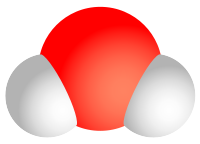

 
Water Molecule


States of Water 

We know that water isn't always "wet", sometimes it's frozen into ice or snow. Depending on the temperature and energy of the molecules in water, water can exist in three states:
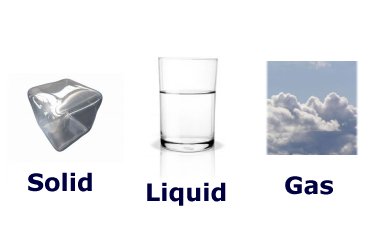
  • Ice - Ice is the solid form of water. When water gets below 0 degrees C (32 deg F) it will freeze and become ice.
  • Liquid - This is the wet stuff we drink and swim around in.
  • Vapor - When water evaporates or gets above 100 degrees C and starts boiling, water turns into its gas state called vapor.
Water on Earth 

Water is literally all over the Earth. Around 70% of the Earth's surface is covered in water. Around 97% of the Earth's water is in the oceans. This water is salt water and we can't drink it. Another 2.4% of the Earth's water is frozen water in glaciers and the polar ice caps. This leaves around 0.6% of the water as freshwater in rivers and lakes that we can drink. 

Does water have taste? 

Pure water actually has no taste at all. What you taste when you drink tap water or bottled water is minerals and other substances that have dissolved in the water. 

Is there water on other planets? 

Yes, water is in a lot of places in outer space. This is because the two elements in water, Hydrogen and Oxygen are two of the most abundant elements in the universe. Much of the water we know about on other planets is ice. Water ice can be found on the Moon, Mars, in Saturn's rings, Pluto, and on Comets. Water vapor is also found in the atmospheres of other planets like Mercury, Venus, Mars, and Jupiter. 

Uses of Water 

We use water for more things than just drinking. We use it in agriculture to grow food, in cleaning to wash our clothes and dishes, in firefighting to put out fires, and in hydropower to create energy with dams. These are just a few ways we use water in our lives. 

Fun Facts about Water
  • Water is often used as the standard in scientific measurements such as temperature and volume.
  • Water that is good for drinking is called potable water.
  • Seventy percent of a human's body is made up of water.
  • Water dissolves more types of materials than any other liquid.
  • In the United States, the average person will use around 80 gallons of water a day. We use the most water by flushing toilets.
  • Ice is less dense than water allowing giant icebergs to float on top of the ocean.
Activities 

Take a ten question quiz about this page. 

среда, 30 октября 2019 г.

Acids and Bases

Acids and Bases

Acids and bases are two special kinds of chemicals. Almost all liquids are either acids or bases to some degree. Whether a liquid is an acid or base depends on the type of ions in it. If it has a lot of hydrogen ions, then it is an acid. If it has a lot of hydroxide ions, then it is a base. 

pH Scale 

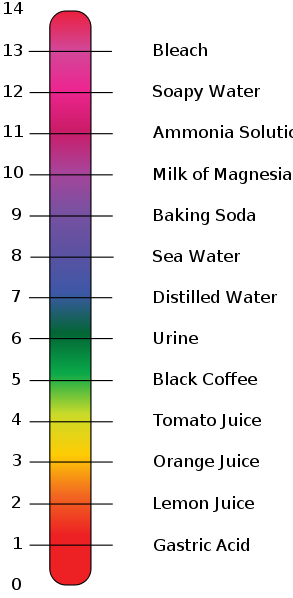
Scientists use something called a pH scale to measure how acidic or basic a liquid is. pH is a number from 0 to 14. From 0 to 7 are acids, with 0 being the strongest. From 7 to 14 are bases with 14 being the strongest base. If a liquid has a pH of 7, it's neutral. This would be something like distilled water. 

Strong Acids and Bases 

Acids with a low pH of around 1 are very reactive and can be dangerous. The same is true for bases of a pH near 13. Chemists use strong acids and bases to get chemical reactions in the lab. Although they can be dangerous, these strong chemicals can also be helpful to us. 


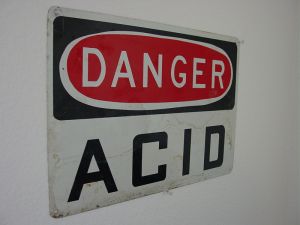
*** Never handle acids or bases in a chemistry lab unless supervised by your teacher. They can be very dangerous and can burn your skin.


Acids and Bases in Nature 

There are many strong acids and bases in nature. Some of them are dangerous and used as poisons by insects and animals. Some are helpful. Many plants have acids and bases in their leaves, seeds, or even their sap. Citrus fruits like lemons and oranges have citric acid in their juice. This is what makes lemons taste so sour. 

Acids and Bases in our Bodies 

Our bodies use acids and bases too. Our stomachs use hydrochloric acid to help digest foods. This strong acid also kills bacteria and helps to keep us from getting sick. Our muscles produce lactic acid when we exercise. Also, our pancreas uses a base called an alkali to help with digestion. These are just a few examples of how the chemistry of bases and acids help our bodies function. 

Other Uses 

Science and technology makes good use of acids and bases. Car batteries use a strong acid called sulphuric acid. Chemical reactions between the acid and lead plates in the battery help make electricity to start the car. They are also used in many household cleaning products, baking soda, and to make fertilizer for crops. 

Fun Facts
  • Acids and bases can help neutralize each other.
  • Acids turn litmus paper red, bases turn it blue.
  • Strong bases can be slippery and slimy feeling.
  • Acids taste sour, bases taste bitter.
  • Proteins are made up of amino acids.
  • Vitamin C is also an acid called ascorbic acid.
  • Ammonia is a base chemical.

понедельник, 20 мая 2019 г.

Solutions and Dissolving

Solutions and Dissolving

What is a solution? 

A solution is a specific type of mixture where one substance is dissolved into another. A solution is the same, or uniform, throughout which makes it a homogeneous mixture . Go here to learn more about mixtures. 

A solution has certain characteristics:
  • It is uniform, or homogeneous, throughout the mixture
  • It is stable and doesn't change over time or settle
  • The solute particles are so small they cannot be separated by filtering
  • The solute and solvent molecules cannot be distinguished by the naked eye
  • It does not scatter a beam of light
Example of a Solution 

One example of a solution is salt water which is a mixture of water and salt. You cannot see the salt and the salt and water will stay a solution if left alone. 

Parts of a Solution
  • Solute - The solute is the substance that is being dissolved by another substance. In the example above, the salt is the solute.
  • Solvent - The solvent is the substance that dissolves the other substance. In the example above, the water is the solvent.
 
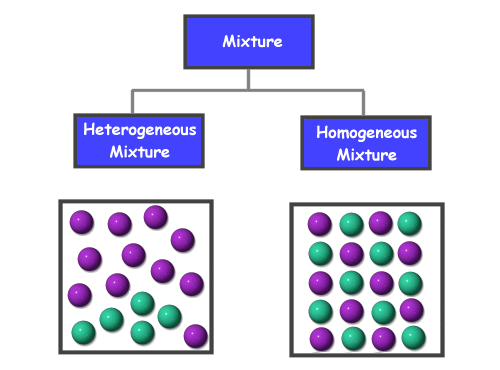
A solution is a type of homogeneous mixture

Dissolving 

A solution is made when one substance called the solute "dissolves" into another substance called the solvent. Dissolving is when the solute breaks up from a larger crystal of molecules into much smaller groups or individual molecules. This break up is caused by coming into contact with the solvent. 

In the case of salt water, the water molecules break off salt molecules from the larger crystal lattice. They do this by pulling away the ions and then surrounding the salt molecules. Each salt molecule still exists. It is just now surrounded by water molecules instead of fixed to a crystal of salt. 

Solubility 

Solubility is a measure of how much solute can be dissolved into a liter of solvent. Think of the example of water and salt. If you keep pouring salt into water, at some point the water isn't going to be able to dissolve the salt. 

Saturated 

When a solution reaches the point where it cannot dissolve any more solute it is considered "saturated." If a saturated solution loses some solvent, then solid crystals of the solute will start to form. This is what happens when water evaporates and salt crystals begin to form. 

Concentration 

The concentration of a solution is the proportion of the solute to solvent. If there is a lot of solute in a solution, then it is "concentrated". If there is a low amount of solute, then the solution is said to be "diluted." 

Miscible and immiscible 

When two liquids can be mixed to form a solution they are called "miscible." If two liquids cannot be mixed to form a solution they are called "immiscible." An example of miscible liquids is alcohol and water. An example of immiscible liquids is oil and water. Have you ever heard the saying "oil and water don't mix"? This is because they are immiscible. 

Interesting Facts about Solutions
  • There is a solvent called aqua regia which can dissolve the noble metals including gold and platinum.
  • You can't see a beam of light when shining it through a true solution. This means fog is not a solution. It is a colloid.
  • Solutions can be liquid, solid, or gas. An example of a solid solution is steel.
  • Solids are generally more soluble at higher temperatures.
  • Carbonated beverages are made by dissolving carbon dioxide gas into liquid at high pressure.

How Small is an Atom?


понедельник, 29 апреля 2019 г.

Separating Mixtures

Separating Mixtures

Many of the substances we use everyday were actually once part of a mixture. Someone somewhere separated that substance from the mixture so we could use it. It turns out that many compounds and elements aren't found in nature in their pure form, but are found as parts of mixtures. Separating substances from mixtures is an important part of chemistry and modern industry. 

Some important chemistry terms are used in this section including mixtures, suspensions, andsolutions. You can click on the links to learn more about each of them. 

Why do we want to separate mixtures? 

All the way back to Ancient History, industrious humans have separated mixtures in order to obtain the specific substances that they need. One example of this is extracting metal from ore in order to make tools and weapons. We'll discuss some other examples of separation below. 

Separation Processes 

The way in which different substances in a mixture are separated is called a process. There are a number of different processes used for separation. Many of them are very complex and involve dangerous chemicals or high temperatures. A lot of important industries in the world today are based on separation processes. 

Filtration 

One common method of separation is filtration. Filters are used everywhere. We use them in our houses to filter dust and mites out of the air we breathe. We use them to filter impurities from our water. We even have filters in our bodies such as our kidneys which act as filters to get bad stuff out of our blood. 

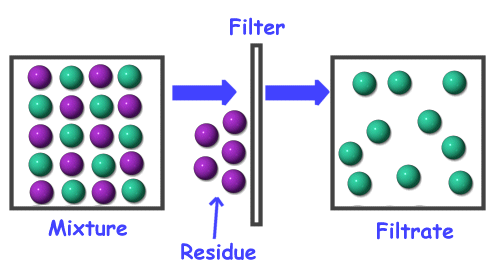
The filtration process is generally used to separate a suspension mixture where small solid particles are suspended in liquid or air. In the case of filtering water, the water is forced through a paper that is made up of a very fine mesh of fibers. The water that has been run through the filter is called the filtrate. The particles that are removed from the water by the filter are called the residue. 

Filtration diagram showing residue and filtrate

Distillation 

Another common separation process is called distillation. Distillation uses boiling to separate mixtures of liquid solutions. It takes into account that different substances in the mixture will have different boiling points. 

For example, if you heat salt water the water in the solution will boil before the salt. The water will then evaporate leaving the salt behind. If the steam from the water is collected it will turn back into liquid as it cools. This cooled water will be pure water without any salt. 

Centrifuge 

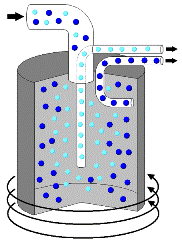
In some cases, there are suspension mixtures where the solid particles are too fine to be separated with a filter. In these cases, sometimes a centrifuge is used. Centrifuges are mechanical devices that spin at very high speeds. These high speeds allow the solid particles in suspensions to settle very quickly. For example, rather than wait for sand to slowly settle to the bottom of water, a centrifuge can cause the sand to settle in a matter of seconds. 

Some examples of how centrifuges are used include separating blood into plasma and red cells, separating cream from milk, and separating uranium isotopes for nuclear power plants.
 
The heavier particles move to the outside
of the cylinder as the centrifuge spins
allowing the mixture to be separated.

Other Processes 

There are many other separation processes such as sublimation, adsorption, crystallization, and chromatography. Sometimes it takes many stages of processes to get to the final result. One example of this is the processing of crude oil. Crude oil uses many levels of fractional distillation to produce a number of different products including gasoline, jet fuel, propane gas, and heating oil. 

Interesting Facts about Separating Mixtures
  • To separate liquid solutions where the substances have similar boiling points, a more complex version of distillation is used called fractional distillation.
  • Painting uses the separation process of evaporation. The wet paint is a mixture of color pigment and a solvent. When the solvent dries and evaporates, only the color pigment is left.
  • The separation process of winnowing was used in ancient cultures to separate the grain from the chaff. They would throw the mixture into the air and the wind would blow away the lighter chaff, leaving the heavier grain.
  • High speed centrifuges can spin up to 30,000 times a minute.
  • Many separation processes are occurring constantly in nature.

Chemical Mixtures

Chemical Mixtures


One of the main aspects of chemistry is combining different substances. Sometimes combining substances can cause a chemical reaction and bonding which creates an entirely new substance called a compound. However, sometimes there is no chemical reaction or bonding. In this case, a mixture is formed from the combined substances. 

Mixture 

A mixture is made when two or more substances are combined, but they are not combined chemically. 

General properties of a mixture:
  • The components of a mixture can be easily separated
  • The components each keep their original properties
  • The proportion of the components is variable
Types of Mixtures 

There are two main categories of mixtures: homogeneous mixtures and heterogeneous mixtures. In a homogenous mixture all the substances are evenly distributed throughout the mixture (salt water, air, blood). In a heterogeneous mixture the substances are not evenly distributed (chocolate chip cookies, pizza, rocks) 
Types of mixtures
Within the categories of homogeneous and heterogeneous mixtures there are more specific types of mixtures including solutions, alloys, suspensions, and colloids. 

Solutions (homogeneous) 

A solution is a mixture where one of the substances dissolves in the other. The substance that dissolves is called the solute. The substance that does not dissolve is called the solvent. 

An example of a solution is salt water. These components can be easily separated through evaporation and they each retain their original properties. However, the salt is dissolved into the water to where you can't see it and it is evenly distributed in the water. In this example the water is the solvent and the salt is the solute. 

What is the difference between a solution and a mixture? 

In chemistry a solution is actually a type of mixture. A solution is a mixture that is the same or uniform throughout. Think of the example of salt water. This is also called a "homogenous mixture." A mixture that is not a solution is not uniform throughout. Think of the example of sand in water. This is also called a "heterogeneous mixture." 

Alloys (homogeneous) 

An alloy is a mixture of elements that has the characteristic of a metal. At least one of the elements mixed is a metal. One example of an alloy is steel which is made from a mixture of iron and carbon. 

Suspensions (heterogeneous) 

A suspension is a mixture between a liquid and particles of a solid. In this case the particles do not dissolve. The particles and the liquid are mixed up so that the particles are dispersed throughout the liquid. They are "suspended" in the liquid. A key characteristic of a suspension is that the solid particles will settle and separate over time if left alone. 

An example of a suspension is a mixture of water and sand. When mixed up, the sand will disperse throughout the water. If left alone, the sand will settle to the bottom. 

Colloids (heterogeneous) 

A colloid is a mixture where very small particles of one substance are evenly distributed throughout another substance. They appear very similar to solutions, but the particles are suspended in the solution rather than fully dissolved. The difference between a colloid and a suspension is that the particles will not settle to the bottom over a period of time, they will stay suspended or float. 

An example of a colloid is milk. Milk is a mixture of liquid butterfat globules dispersed and suspended in water. 

Colloids are generally considered heterogeneous mixtures, but have some qualities of homogeneous mixtures as well. 

Interesting Facts about Mixtures
  • Smoke is a mixture of particles that are suspended in the air.
  • Tap water is a mixture of water and other particles. Pure water or H2O is generally referred to as distilled water.
  • Many of the substances we come into contact with every day are mixtures including the air we breathe which is a mixture of gases like oxygen and nitrogen.
  • Blood is a mixture that can be separated by a machine called a centrifuge into its two main parts: plasma and red blood cells.
  • Mixtures can be liquids, gases, and solids.