среда, 26 февраля 2020 г.

Chemical Composition of the Human Body

Major Classes of Compounds in the Human Body

Most of the elements are found within compounds. Water and minerals are inorganic compounds. Organic compounds include fat, protein, carbohydrates, and nucleic acids.

  • Water: Water is the most abundant chemical compound in living human cells, accounting for 65 percent to 90 percent of each cell. It's also present between cells. For example, blood and cerebrospinal fluid are mostly water.
  • Fat: The percentage of fat varies from person to person, but even an obese person has more water than fat.
  • Protein: In a lean male, the percentages of protein and water are comparable. It's about 16 percent by mass. Muscles, including the heart, contain a lot of muscle. Hair and fingernails are protein. Skin contains a large amount of protein, too.
  • Minerals: Minerals account for about 6 percent of the body. They include saltsand metals. Common minerals include sodium, chlorine, calcium, potassium, and iron.
  • Carbohydrates: Although humans use the sugar glucose as an energy source, there isn't that much of it free in the bloodstream at any given time. Sugar and other carbohydrates only account for about 1% of body mass.

среда, 18 декабря 2019 г.

Chemistry Lab Equipment

Chemistry Lab Equipment

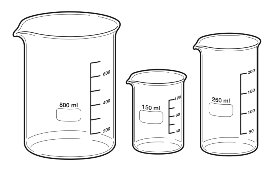
Beaker - A beaker is a glass container with a flat bottom and a small spout for pouring. It is used in the chemistry lab for mixing, heating, and stirring liquids. Beakers come in various sizes and are shaped like a cylinder.
Chemistry lab beakers Beakers

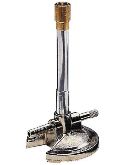
Bunsen burner - The Bunsen burner is a metal tube that produces a flame from gas such as methane, propane, or butane. It is used in the lab for heating and sterilizing. The Bunsen burner is named after German chemist Robert Bunsen.

Bunsen burner


Crucible - Crucibles are containers used for heating substances to very high temperatures. They are generally made from materials such as porcelain, nickel, and alumina. 

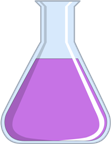
Erlenmeyer flask - This is a type of chemistry flask with a conical shaped body, a cylindrically shaped neck, and a flat bottom. It generally has measurement marks on the side. It is similar to a beaker, but has the cone shaped body. The cone shape reduces losses from evaporation and helps to prevent spills when stirring the liquid.

Erlenmeyer flask

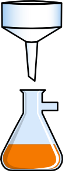
Funnel - A funnel is a pipe with a wide mouth that helps to pour substances into a container without spilling. In a chemistry lab, funnels are often used together with filters to separate a mixture.

Funnel and flask

Gloves - Laboratory gloves are important to wear in order to protect the skin from chemical substances. Always listen to your teacher and make sure to wear gloves when performing experiments.

Always wear gloves

Goggles - Goggles are very important when performing experiments of any kind. They can keep dangerous chemicals and other substances from damaging your eyes. Always wear your goggles in the lab!

Always wear goggles

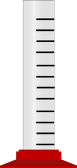
Graduated cylinder - A tall skinny cylinder used to measure volumes. It is generally a more accurate way to measure volume than a typical beaker or flask.

Graduated cylinder

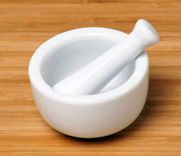
Mortar and pestle - A mortar and pestle are used to crush and grind solids into a powder. The mortar is a bowl and the pestle is a small club-shaped tool. They are typically made from ceramic or stone.

Mortar and pestle

Pipette - A narrow glass tube used to transfer liquids from one place to another. Pipettes sometimes are used for measurement. The accuracy of different pipettes varies widely.

Pipette


Scoopula - A scoopula is a metal spatula-type utensil used to scoop up solids such as powders in a chemistry lab. 

Stirring rod - A skinny solid glass rod used in chemistry to mix chemicals and liquids. A stirring rod is typically about the length of a long straw and has rounded ends. 

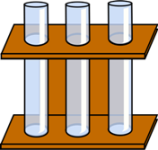
Test tube - A test tube is a glass or plastic tube used for holding, mixing, and heating small quantities of liquid chemicals. Test tubes often have a flared top to help with pouring. They come in a variety of sizes. 

Test tube holder - A stand built for holding multiple test tubes. 

Test tube brush - A brush designed to help clean out test tubes. 

Test tube clamps - Clamps that hold test tubes while using them to heat up chemicals during a lab experiment.

Test tubes in a holder

Thermometer - A device used for measuring the temperature of a substance. 

Triangle - A triangle made of clay pipes and wire that can withstand high temperatures. It is often used to hold a crucible. 

Wire gauze - A wire gauze is used to support a beaker or flask when heating. The wire gauze helps to spread the heat evenly. 

Organic Chemistry

Organic Chemistry


What is organic chemistry? 

Organic chemistry is the study of compounds that contain the element carbon. This is a wide ranging topic that overlaps with other sciences like biochemistry, medicine, and materials science. Organic chemists study the properties, structure, and chemical reactions of organic compounds. 

Why is carbon important? 

Carbon is the central element to all living organisms. It is the basis to all life on earth. By studying carbon and organic compounds, scientists can learn more about life, the human body, and how it works. 

Organic Molecules 

Most organic molecules are made up of long rings or chains of carbon atoms with atoms of other elements attached. Common elements besides carbon (C) that are found in organic compounds include hydrogen (H), oxygen (O), nitrogen (N), phosphorus (P), and sulfur (S). Some examples of organic molecules include:
  • Carbohydrates - Carbohydrates consist only of carbon, hydrogen, and oxygen. They include starches and sugars and play an important role in our daily lives.
  • Lipids - Lipids include fats and waxes. They are used for long term storage of energy in life forms.
  • Proteins - Proteins are made up of long chains of amino acids. Proteins play an important role in nearly every process that takes place in cells.
  • Nucleic Acids - Nucleic acids make up long chains of components such as DNA and RNA. DNA carries information such as genes for protein molecules to use. The RNA helps to move the DNA code from storage to where it can be used.
Types of Organic Compounds or Functional Groups 

There are a number of types of organic compounds. Scientists divide these up into functional groups based on the type of element common to the group in addition to carbon. These groups have similar properties because they have similar molecules. 

Hydrocarbons 

Hydrocarbons form a functional group of organic compounds that are composed of only hydrogenand carbon atoms. Within the group of hydrocarbons are other groups such as alkanes. Alkanes include ethane, propane, methane, and butane. A lot of these compounds are used for heating and cooking. Other groups of hydrocarbons are alkenes, and alkynes. 

Other elements 

Other elements that carbon combines with to form organic compounds include oxygen, nitrogen, sulfur, phosphorus, and boron. 

Organic Synthesis 

Organic synthesis is the process of making organic compounds. Many of the products we use everyday are made from organic compounds produced in large factories. Examples of these include plastics, alcohols, rubber, and dyes. 

What is the difference between organic chemistry and biochemistry? 

We learned that organic chemistry is the study of compounds containing carbon. Biochemistry, on the other hand, is the study of chemical processes in biological systems. These two sciences often overlap as organic compounds play an important role in many chemical processes. 

Interesting Facts about Organic Chemistry
  • Carbon occurs in its pure form in nature as graphite and diamond.
  • Around 18 percent of the human body is carbon atoms.
  • Charles Goodyear found that combining rubber with sulfur allowed the rubber to be more durable across temperatures.
  • Synthetic dyes made from organic compounds have allowed the manufacture of dyes rather than using plants for dyes.
  • DNA molecules are very long. If you stretched one out it would be about three feet long.

четверг, 28 ноября 2019 г.

THE MAP OF CHEMISTRY

THE MAP OF CHEMISTRY


Water

Water is one of the most important substances on planet Earth. All forms of life need water to live. Water is constantly moving about the Earth through the water cycle

What is water? 

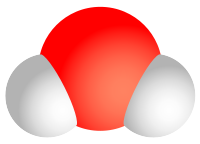
Like all "stuff", water is made up of molecules. Maybe you have heard water called H2O? This is actually the chemical formula for the molecule that makes up water. The H stands for hydrogenatoms and the O for oxygen atoms. Each water molecule is made up of two hydrogen atoms and one oxygen atom.


Water Molecule


States of Water 

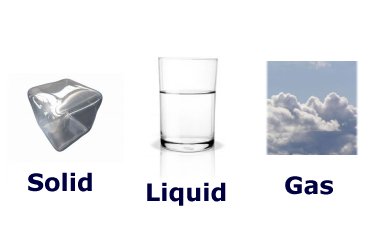
We know that water isn't always "wet", sometimes it's frozen into ice or snow. Depending on the temperature and energy of the molecules in water, water can exist in three states:
  • Ice - Ice is the solid form of water. When water gets below 0 degrees C (32 deg F) it will freeze and become ice.
  • Liquid - This is the wet stuff we drink and swim around in.
  • Vapor - When water evaporates or gets above 100 degrees C and starts boiling, water turns into its gas state called vapor.
Water on Earth 

Water is literally all over the Earth. Around 70% of the Earth's surface is covered in water. Around 97% of the Earth's water is in the oceans. This water is salt water and we can't drink it. Another 2.4% of the Earth's water is frozen water in glaciers and the polar ice caps. This leaves around 0.6% of the water as freshwater in rivers and lakes that we can drink. 

Does water have taste? 

Pure water actually has no taste at all. What you taste when you drink tap water or bottled water is minerals and other substances that have dissolved in the water. 

Is there water on other planets? 

Yes, water is in a lot of places in outer space. This is because the two elements in water, Hydrogen and Oxygen are two of the most abundant elements in the universe. Much of the water we know about on other planets is ice. Water ice can be found on the Moon, Mars, in Saturn's rings, Pluto, and on Comets. Water vapor is also found in the atmospheres of other planets like Mercury, Venus, Mars, and Jupiter. 

Uses of Water 

We use water for more things than just drinking. We use it in agriculture to grow food, in cleaning to wash our clothes and dishes, in firefighting to put out fires, and in hydropower to create energy with dams. These are just a few ways we use water in our lives. 

Fun Facts about Water
  • Water is often used as the standard in scientific measurements such as temperature and volume.
  • Water that is good for drinking is called potable water.
  • Seventy percent of a human's body is made up of water.
  • Water dissolves more types of materials than any other liquid.
  • In the United States, the average person will use around 80 gallons of water a day. We use the most water by flushing toilets.
  • Ice is less dense than water allowing giant icebergs to float on top of the ocean.
Activities 

Take a ten question quiz about this page. 

среда, 30 октября 2019 г.

Acids and Bases

Acids and Bases

Acids and bases are two special kinds of chemicals. Almost all liquids are either acids or bases to some degree. Whether a liquid is an acid or base depends on the type of ions in it. If it has a lot of hydrogen ions, then it is an acid. If it has a lot of hydroxide ions, then it is a base. 

pH Scale 

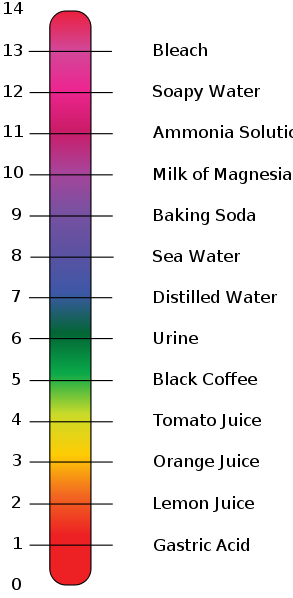
Scientists use something called a pH scale to measure how acidic or basic a liquid is. pH is a number from 0 to 14. From 0 to 7 are acids, with 0 being the strongest. From 7 to 14 are bases with 14 being the strongest base. If a liquid has a pH of 7, it's neutral. This would be something like distilled water. 

Strong Acids and Bases 

Acids with a low pH of around 1 are very reactive and can be dangerous. The same is true for bases of a pH near 13. Chemists use strong acids and bases to get chemical reactions in the lab. Although they can be dangerous, these strong chemicals can also be helpful to us. 


*** Never handle acids or bases in a chemistry lab unless supervised by your teacher. They can be very dangerous and can burn your skin.


Acids and Bases in Nature 

There are many strong acids and bases in nature. Some of them are dangerous and used as poisons by insects and animals. Some are helpful. Many plants have acids and bases in their leaves, seeds, or even their sap. Citrus fruits like lemons and oranges have citric acid in their juice. This is what makes lemons taste so sour. 

Acids and Bases in our Bodies 

Our bodies use acids and bases too. Our stomachs use hydrochloric acid to help digest foods. This strong acid also kills bacteria and helps to keep us from getting sick. Our muscles produce lactic acid when we exercise. Also, our pancreas uses a base called an alkali to help with digestion. These are just a few examples of how the chemistry of bases and acids help our bodies function. 

Other Uses 

Science and technology makes good use of acids and bases. Car batteries use a strong acid called sulphuric acid. Chemical reactions between the acid and lead plates in the battery help make electricity to start the car. They are also used in many household cleaning products, baking soda, and to make fertilizer for crops. 

Fun Facts
  • Acids and bases can help neutralize each other.
  • Acids turn litmus paper red, bases turn it blue.
  • Strong bases can be slippery and slimy feeling.
  • Acids taste sour, bases taste bitter.
  • Proteins are made up of amino acids.
  • Vitamin C is also an acid called ascorbic acid.
  • Ammonia is a base chemical.